Lyophilised peptide has to be dissolved before it can be measured out, and the liquid you dissolve it in matters more than most people think. The two common choices are sterile water and bacteriostatic water. They look identical. They are not.
Sterile water
Sterile water for injection is purified water with nothing added. It is sterile when the seal is broken, and from that moment on anything that gets in can grow in it. That is why it is intended for single use: open, draw, discard the rest.
Bacteriostatic water
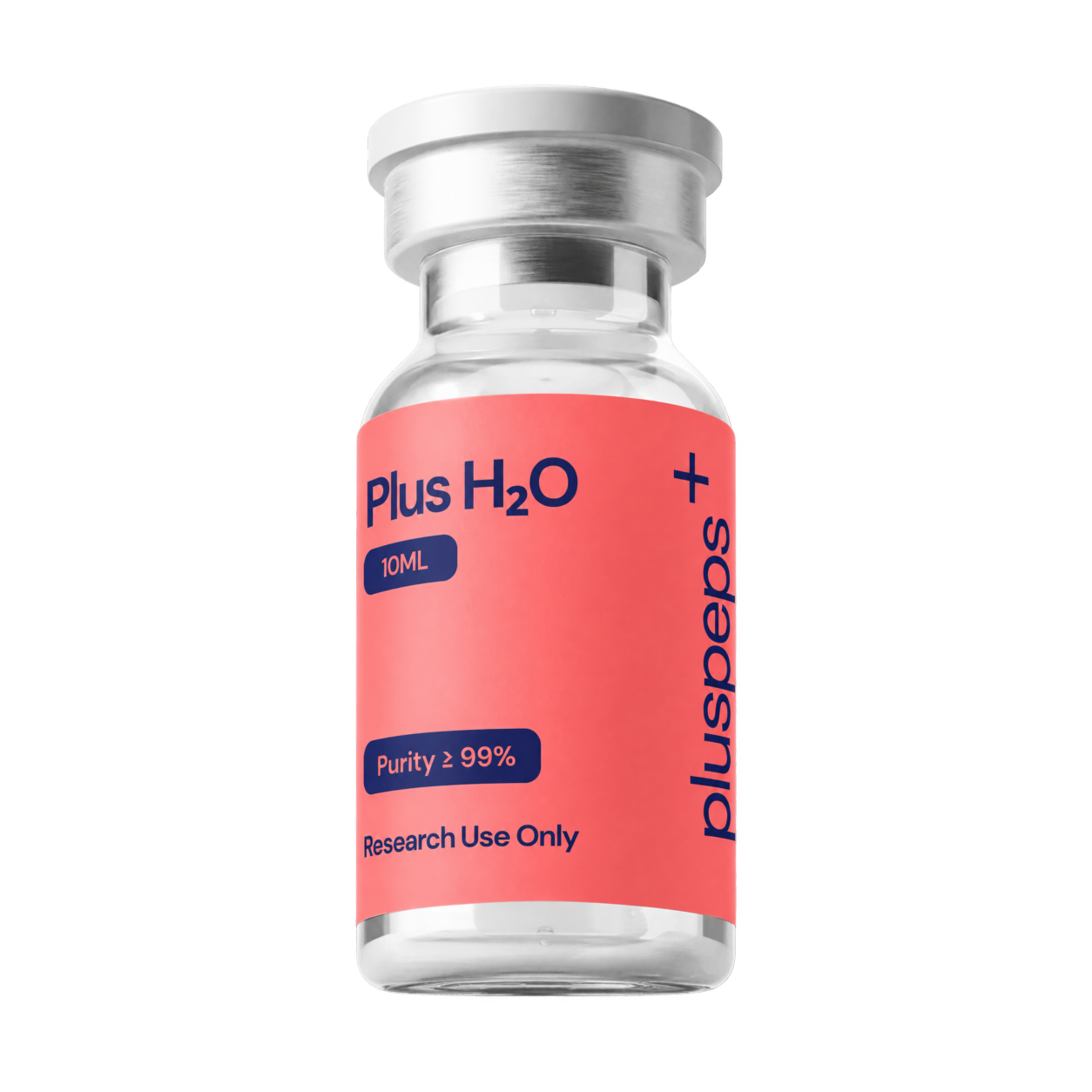
Bacteriostatic water is the same purified water with 0.9% benzyl alcohol added. The benzyl alcohol does not sterilise the water; it stops bacteria multiplying in it. That makes the vial suitable for multiple draws over a period of time, which is exactly how a reconstituted peptide vial gets used in practice. It is the standard choice for lab reconstitution for that reason. We stock it as Plus H₂O.
When to use which
If you will reconstitute a vial and draw from it more than once, use bacteriostatic water. If you need a preservative-free solution for a single immediate use, sterile water is fine. A few peptides are sensitive to benzyl alcohol; if a supplier’s data sheet says so, follow it.
Reconstituting without wasting the vial
The powder in the vial is often a thin cake stuck to the bottom or the wall, and it is fragile. The goal is to dissolve it gently.
- Let both vials reach room temperature. Wipe both stoppers with an alcohol swab and let them dry.
- Decide how much water to add first. The amount sets the concentration, and our peptide calculator does that arithmetic for you.
- Draw the water into a syringe. Push the needle through the peptide vial’s stopper and aim the stream at the glass wall, not the powder, so it runs down slowly.
- Do not shake. Roll or swirl the vial gently until the solution is clear. Some peptides take a minute or two.
- Label it: product, concentration, date.
- Store it in the fridge, in the dark, and use it within your protocol’s window. See the storage guide.
Common mistakes
Shaking the vial, which can damage the peptide and makes foam that is hard to measure. Adding water straight onto the powder at speed. Reconstituting more than will be used in the solution’s usable window. Using tap or distilled drinking water, which is not sterile and not meant for this.
Bacteriostatic water is cheap and the peptide is not. Buying a vial of water with every order is the single easiest way to protect the vials that cost real money.
All products on this site are sold for laboratory research only. Nothing here is medical advice.